Comunidade Land in Goa: Why You Can't Actually Buy It (2026)

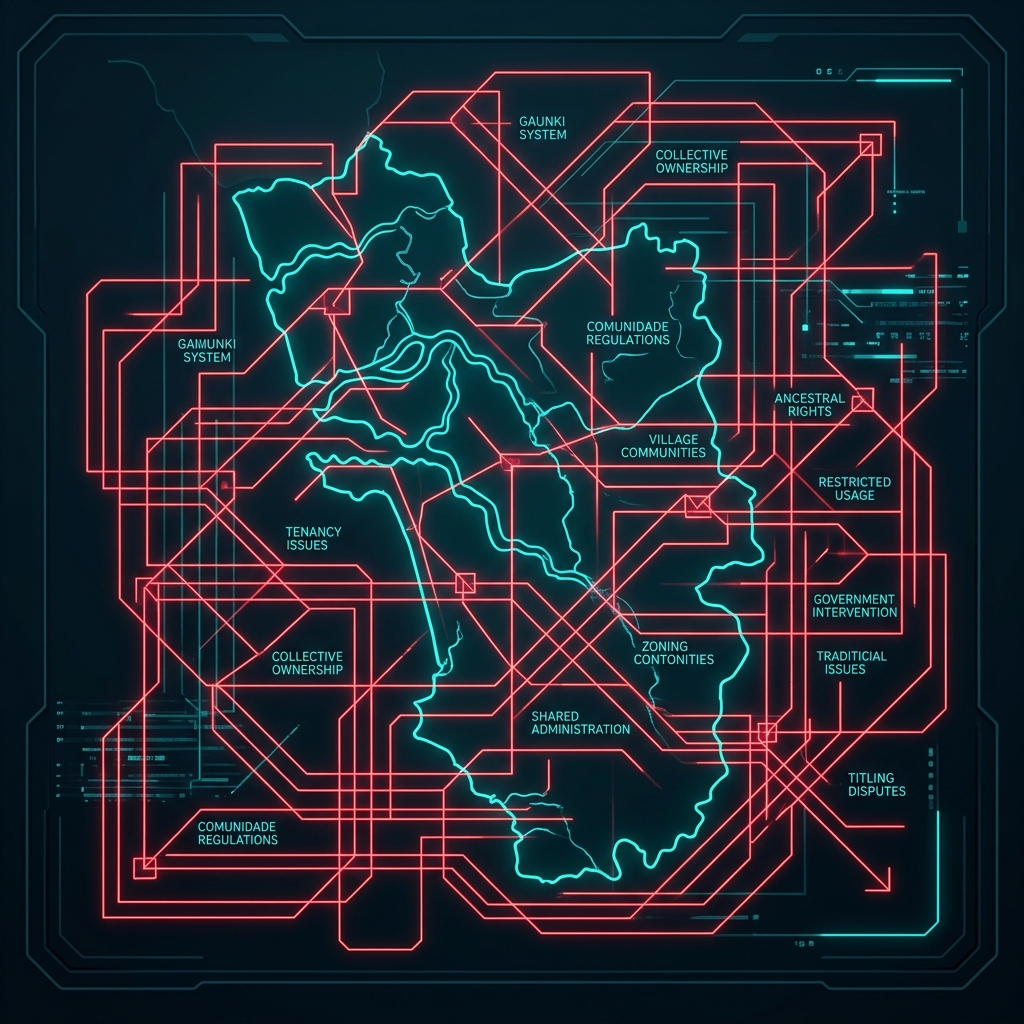
The cheapest "clear title" plots in Goa often aren't sold by a person at all. They're sold by a village.
Drive through the interior of Salcete or Bardez and you will be offered "comunidade land" — quiet, green, and a fraction of the price of the plot next door. "Old comunidade land, sir," the broker will say, "clear title, the village has held it for generations — no dispute." What that pitch leaves out is the part that decides everything: comunidade land is owned collectively by the village, and by law it cannot be sold. Not to you, not to the broker, not to anyone.
You can spend a crore on it and still never own it. Here is how the system actually works — and what you are really buying when someone sells you a "comunidade plot."
What Is Comunidade Land in Goa?
A comunidade (sometimes spelled communidade) is a centuries-old village land association — a collective that owns the agricultural land of a Goan village on behalf of its founding families. The institution predates the Portuguese; they simply codified it. The current rulebook, still in force, is the Code of Comunidades, 1961 (Legislative Diploma No. 2070).
The defining feature, and the one brokers gloss over: the land belongs to the comunidade as a body, not to any individual. There is no single owner whose name you can buy out. The village is the owner.
Who Actually Owns Comunidade Land?
The comunidade is run by and for two groups:
- Gaonkars (also gaunkars / ganvkars) — the male-line descendants of the village's founding families, who hold the membership and management rights.
- Accionistas (zonnkars) — shareholders who hold acções (shares) and receive a dividend called zonn (or jono) out of the comunidade's income.
Day to day, the comunidade is supervised by a government officer — the Administrator of Comunidades — and its lands are reflected in the state's revenue records.
Notice who is not on that list: an outside buyer. There is no membership you can purchase your way into, and no share sale that hands you the underlying land. The most a buyer can hold is a grant from the comunidade — which is a very different thing from ownership.
Can You Buy Comunidade Land in Goa?
No. Comunidade land cannot be bought outright. Under the Code of Comunidades these lands are inalienable — the comunidade is barred from selling or transferring them. The only situation in which comunidade land can be sold at all is a liquidation, when the comunidade's other assets are found inadequate to cover its debts — not a route any normal buyer will ever see.
So when a broker offers you a "comunidade plot for sale," one of three things is true, and you need to know which:
- It's an aforamento — a long lease from the comunidade. Legitimate, but a lease, not freehold (see below).
- It's a re-sale of someone's aforamento rights — also a lease interest, with the comunidade's foro still attached.
- It's an encroachment — land someone occupied or built on without a lawful grant. This is the dangerous one, and the 2025 rules (below) are aimed squarely at it.
If the seller can't tell you which of the three you're looking at — walk.
Aforamento: The Only Legal Way In
The Code does give the comunidade one way to put land in private hands: aforamento, a form of emphyteusis — a perpetual lease. The grantee pays the comunidade an annual ground rent called foro, and in return gets durable, inheritable rights to use the land.
As leases go, an aforamento is genuinely strong:
- You can build on it, mortgage it, gift it, and transfer it — the new holder simply takes over the foro.
- An aforamento is hard to cancel for missed foro alone — historically the comunidade's remedy has been to recover the unpaid ground rent (capped at a few years' arrears), not to take the land back. Treat that as a reason to keep the foro current, not a licence to stop paying.
- After about 20 years, the Code lets you redeem the foro — broadly, by paying out roughly 20 years' worth of instalments — and the lease converts to full ownership (the comunidade's residual interest and your use-right merge). The exact multiple and conditions are set by the Code.
That redemption clause is the real path to owning what was once comunidade land — and it's why genuine, decades-old aforamento holdings do change hands legitimately. But understand what you hold until then: a lease, with a landlord that is an entire village, governed by a 1961 code and supervised by a government administrator. Price it as a lease, confirm the foro is paid up, insist on the original grant deed — not a notarised photocopy of a story — and have a Goa property lawyer verify the exact terms, including how redemption and arrears actually work in your case.
What Changed in 2025 (and Why It Matters to Buyers)
2025 was the most active year for comunidade law in a generation, and almost all of it tightens the screws on irregular holdings. These are new and contested statutes — take the specifics below as the position as enacted in 2025, and verify the current text and status before relying on any of it:
- The Administrator can now take land back. The Goa Legislative Diploma No. 2070 (Amendment) Act, 2025 inserted Article 31-A, restricting any change in the use of comunidade-granted land, and empowered the Administrator of Comunidades to reclaim land used for a purpose other than the one it was granted for — via a show-cause notice followed by an order reverting the land to the comunidade. Buy a granted plot, use it for something the grant didn't allow, and that is now a reversion risk.
- A one-time regularisation window — likely closed, with a 20-year lock. Bill No. 39 of 2025 added Article 372-B, a single structured route to regularise dwelling houses built before 28 February 2014 on comunidade land without a lawful grant — but only for landless occupants with 15+ years' residence and no other property. The Act commenced on 4 October 2025 (Oct. 2025 Gazette), and Article 372-B clause (3) required applications within six months of commencement — meaning the window would have closed around April 2026 unless the government has extended it. Verify the current status of this route with a Goa advocate before relying on it. Even when granted, the regularised land cannot be sold or transferred for 20 years (gifts to family aside), and plots in agricultural tenancies, forests, sanctuaries, post-1991 CRZ and eco-sensitive areas are excluded outright. False claims trigger reversion, a fine up to ₹1,00,000, and up to two years' imprisonment. This is an amnesty for long-settled residents, not an investor on-ramp.
- It is being fought. Sixty-seven comunidade presidents have resolved to challenge the regularisation in the Supreme Court, and the Court has separately ordered action against illegal constructions on comunidade land, with North and South Goa collectors issuing enforcement memoranda — so the regularisation route may yet be stayed or rewritten before it ever helps a buyer.
What this means for a buyer: the state is actively un-winding irregular comunidade occupation, not blessing it. A "comunidade plot" with a murky grant history is a worse bet in 2026 than it was even two years ago.
Comunidade vs. Sanad vs. Zone: How They Stack
This is where most buyers get lost, so be precise. Comunidade is a question of who owns the land. The Sanad and the zone are questions of what you can do with it. They are separate layers, and a single plot can fail on more than one:
| Layer | The question it answers | Where it's recorded |
|---|---|---|
| Comunidade (title) | Who owns it? The village collective — and it's inalienable. | Form I & XIV; Administrator of Comunidades |
| Zone (land use) | Can you build? Settlement = yes; Orchard / green = no. | Regional Plan; TCP Zoning Certificate |
| Sanad (NA conversion) | Is agricultural land cleared for building? | Conversion Sanad under the Land Revenue Code |
A plot can be comunidade-owned and orchard-zoned — meaning you can neither buy it cleanly nor build on it. Our companion guide walks the use/zone side in full: the Sanad trap and Goa's orchard-land conversion rules. Read both before you treat any cheap Goa plot as a bargain.
The NRI Angle: Two Walls, Not One
If you hold an NRI or OCI passport, comunidade land is blocked twice over — the same double bind as orchard land:
- FEMA. Comunidade land is almost always agricultural-class land. Under the Foreign Exchange Management Act, an NRI or OCI cannot purchase agricultural land, plantation property, or a farmhouse in India — only inherit it. So even a clean aforamento transfer of agricultural comunidade land is a transaction FEMA does not permit you to make.
- Title. Even setting FEMA aside, there is no freehold to acquire — only a village-owned lease, now under active state scrutiny.
For an NRI, "cheap comunidade land" is not an opportunity with a catch. It is a deal you are not legally positioned to do. Stick to freehold, Settlement-zone property with clean title, or RERA-registered residential projects. Our guide to what NRIs can and cannot buy in India lays out the full FEMA picture.
How to Check If a Plot Is Comunidade Land
Don't take the seller's word on ownership any more than on the zone. Check the records:
- Pull the Form I & XIV (record of rights) for the exact survey number. If the land is comunidade-owned, the owner/occupant column will name the "Comunidade of [village]" — not an individual. That single line is the whole story.
- Cross-check with the Administrator of Comunidades for the taluka. The comunidade's own records (the matriz) show what is granted, to whom, and on what foro.
- If it's offered as aforamento, demand the original grant deed and current foro receipts. Confirm the survey number on the deed matches the plot, and that the foro is paid up.
- Check the zone separately. Comunidade or not, an orchard-zoned plot still can't be built on. Run the title-search checklist end to end.
And because comunidade law is genuinely arcane — a Portuguese-era code, village governance, and a live wave of 2025 amendments — this is one area where a Goa-based property lawyer is not optional. A title opinion that explicitly addresses comunidade status is the cheapest insurance you will buy on the entire deal.
Frequently Asked Questions
What is comunidade land in Goa?
Comunidade land is agricultural land owned collectively by a Goan village association (the comunidade) on behalf of its founding families, governed by the Code of Comunidades, 1961. Ownership rests with the village as a body, not with any individual.
Can you buy comunidade land in Goa?
No. Comunidade land is inalienable under the Code of Comunidades and cannot be sold outright, except in rare liquidation proceedings. The only lawful way to hold it privately is an aforamento — a perpetual lease from the comunidade in exchange for an annual ground rent (foro).
What is aforamento?
Aforamento is a form of emphyteusis — a perpetual lease granted by a comunidade. The grantee pays an annual foro, can build on, mortgage, gift and transfer the rights, and after 20 years can redeem the foro to become a full owner. Until then it is a lease, not freehold.
Can an NRI buy comunidade land in Goa?
No. Comunidade land is almost always agricultural-class land, and under FEMA an NRI or OCI cannot purchase agricultural land, plantation property or farmhouses in India — only inherit them. NRIs should restrict themselves to freehold Settlement-zone property or RERA-registered projects.
How do I know if a plot is comunidade land?
Pull the Form I & XIV for the survey number: comunidade land lists the "Comunidade of [village]" as the owner rather than an individual. Cross-check with the Administrator of Comunidades, and for any aforamento ask for the original grant deed and current foro receipts.
What is the foro?
The foro is the annual ground rent an aforamento holder pays to the comunidade for the use of its land. It can be redeemed after roughly 20 years — broadly, by paying out the remaining instalments — at which point the lease converts to full ownership.
The Bottom Line
Comunidade land is one of Goa's most misunderstood traps because the misunderstanding is baked into the word buy. You don't buy comunidade land. At best you take a lease from a village under a 1961 code; at worst you pay a crore for an encroachment the Administrator can now reclaim.
If you want to own land in Goa with the right to build and the right to sleep at night, the rule is the same one that governs the Sanad and orchard-zone question: buy freehold, Settlement-zone land with clean, individually held title. Pay more, own it outright, and let someone else chase the "bargain" that belongs to the whole village.
Next step: Compare the legal terrain before you commit — Maharashtra vs. Goa land laws — and if a specific Goa plot is already on the table, run it past the title-search checklist first.
Read Next

Orchard Land in Goa: The "Sanad" Trap & Conversion Rules (2026)
Cheap "authorized" plots in Goa are usually Orchard (green-zone) land. Why you can't build on them, why NRIs can't legally buy them, how the Sanad / NA land- conversion process actually works, and what the 2026 rules really allow.
Orchard Land Meaning in Goa: What You Can Actually Do (2026)
What "orchard land" (often misheard as "orchid land") actually means in Goa — the RP21 green zone, what you can and cannot build, why the plots are cheap, and the conversion reality.

Sanad Conversion Cost in Goa: Fees, Slabs & Timeline (2026)
What a conversion Sanad actually costs in Goa — the notified per-sqm fee slabs, the 2024 fee revision, the document checklist, a worked example, and the honest timeline.